
Your brain is always adapting. Discover what is possible.
Neurofeedback
Our brains are constantly working to help us navigate the world around us. Over time, we develop patterns of thinking, responding, and behaving based on our experiences. Some of these patterns serve us well, while others may continue long after they are no longer helpful. At PAASI Family Therapy, we offer NeurOptimal® Dynamical Neurofeedback, a non-invasive system designed to provide the brain with information about its own activity in real time. Rather than attempting to control or direct brain activity, NeurOptimal® allows the brain to respond to information about changes occurring within itself. Neurofeedback is not psychotherapy, and it may be used independently as a wellness service or alongside the therapeutic process.
How Does NeurOptimal® Work?
The brain is continuously adapting to our experiences and surroundings. It develops automatic processes that allow us to function efficiently without having to consciously think through every action or response. These processes can be beneficial, but patterns that developed during periods of stress or difficult experiences may persist even when our circumstances change.
NeurOptimal® Dynamical Neurofeedback uses sensors placed on the scalp and ears to monitor electrical activity. While you sit comfortably and listen to calming music, the system detects changes in that activity and briefly interrupts the music. These momentary interruptions provide feedback about the brain’s activity as it occurs. The system does not tell the brain what to do, which brainwave patterns to produce, or how it should function. Instead, it provides information that the brain may respond to through its natural adaptive processes.
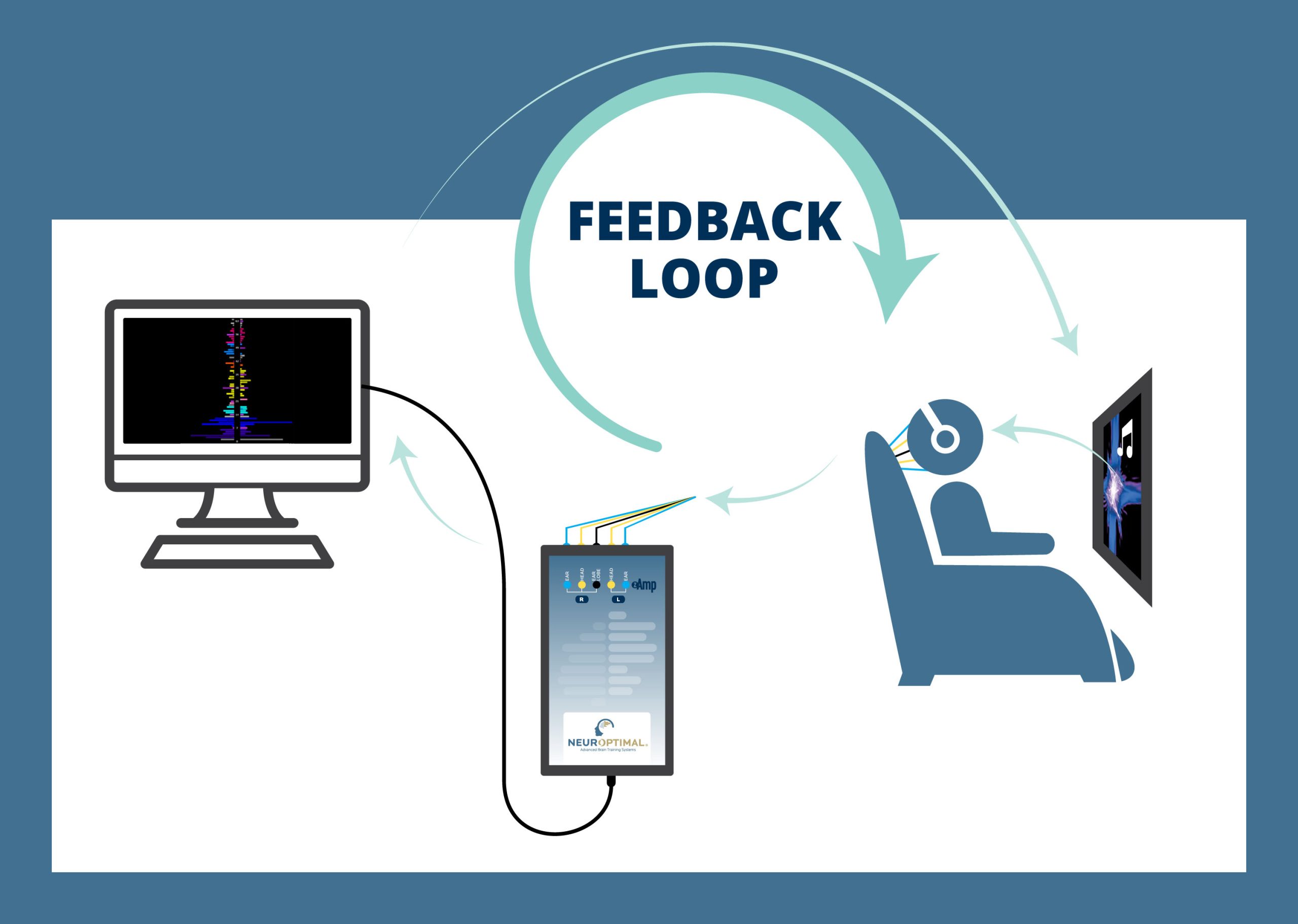
Giving Your Brain a Mirror
Imagine going an entire month without looking in a mirror. You continue your normal hygiene routine, brush your hair, and get dressed each day, but you never actually see your reflection. When you finally look in the mirror, you may notice things you would like to adjust. The mirror does not tell you how to look or what to change. It simply provides information that allows you to decide what to do. By providing feedback about changes in brain activity, the system acts as a mirror for the brain.
What to Expect During a Session
NeurOptimal® sessions are simple, comfortable, and require very little effort from the participant. Small sensors are placed on the scalp and ears to monitor electrical activity. These sensors receive information and do not send electricity or stimulation into the brain. During the session, you relax comfortably while listening to calming music. You may notice brief interruptions in the music as the system provides feedback about changes in brain activity.
There are no exercises to complete, thoughts to control, or specific mental states you must achieve. Each training session lasts approximately 33 minutes. Many people describe the experience as relaxing or refreshing, although individual experiences and responses can vary.
Who May Benefit From Neurofeedback?
People explore neurofeedback for a variety of reasons, including stress and burnout, anxiety and chronic worry, trauma-related symptoms, sleep difficulties, emotional regulation, mental fatigue, difficulty concentrating, hypervigilance, brain fog, and interest in performance or overall wellness. Some people are looking for additional support while managing ongoing challenges, while others simply want to explore an approach focused on nervous system adaptability.
Neurofeedback is not a cure or established treatment for these conditions, and results cannot be guaranteed. Experiences differ from person to person, and some individuals may not notice meaningful changes. Anyone with medical or mental health concerns should continue working with their qualified healthcare professionals.

Neurofeedback Separate from Psychotherapy
NeurOptimal® Dynamical Neurofeedback is available as a standalone service at PAASI Family Therapy. Individuals do not need to participate in psychotherapy, have a mental health diagnosis, or be experiencing significant emotional distress to explore neurofeedback training. Some people are interested in neurofeedback because they are experiencing ongoing stress, difficulty sleeping, or challenges with concentration, while others simply want to support their overall well-being and explore their brain’s natural capacity for adaptation.
Unlike psychotherapy, neurofeedback does not require discussing personal experiences, processing difficult memories, or identifying specific thoughts and behaviors. The training process occurs while the individual relaxes and listens to music, allowing the system to monitor brain activity and provide feedback without requiring conscious effort. This makes neurofeedback an option for individuals who are not interested in traditional counseling, as well as those who simply prefer a different approach to supporting their well-being.
For individuals already participating in psychotherapy, neurofeedback may also serve as a complementary wellness tool. The two services are distinct, and participation in one does not require participation in the other. At PAASI Family Therapy, we believe individuals should have the opportunity to explore different approaches and make informed decisions about the services that best align with their needs and goals.
Neurofeedback and the Therapeutic Process
At PAASI Family Therapy, we recognize that emotional well-being involves more than conscious thoughts and behaviors. Our experiences can influence how we respond to stress, process emotions, and interact with the world around us. Psychotherapy provides opportunities to explore beliefs, experiences, relationships, and patterns of behavior. Neurofeedback takes a different approach by providing real-time information about brain activity without requiring conscious participation in that process.
Although these services have different purposes, some individuals choose to use both. Neurofeedback may be incorporated as an additional wellness tool alongside psychotherapy, but it is not a substitute for evidence-based mental health care. Our goal is to help individuals understand their options rather than assume that one approach is appropriate for everyone.

A Different Approach to Brain Training
Unlike other neurofeedback approaches that guide brain activity toward predetermined patterns, NeurOptimal® Dynamical Neurofeedback does not establish a specific target for the brain to achieve. The system monitors changes in electrical activity and provides feedback through brief interruptions in music. It does not diagnose conditions, identify particular dysfunctional brain patterns, or instruct the brain to produce specific changes.
NeurOptimal® is designed around the idea that the brain can use information about its own activity as part of its adaptive processes. Research on this particular system and its long-term clinical outcomes remains limited, and claims about lasting improvement should be approached cautiously. We believe clients deserve realistic expectations and clear information about both the intended purpose and the limitations of the service.
You do not have to be experiencing a mental health condition or participating in counseling to explore neurofeedback. Whether you are interested in general wellness, nervous system resilience, or an additional tool to complement psychotherapy, we welcome the opportunity to discuss whether NeurOptimal® may be appropriate for you.
Contact PAASI Family Therapy to learn more about neurofeedback or to schedule an appointment.